How to Choose the Best Drive-in Storage System?

Time:2026-09-24 Author:Charlotte
0%

Choosing the right Drive-in Storage system begins with understanding your inventory, not chasing maximum density. This racking method uses fewer aisles and deeper pallet lanes. It can create impressive capacity inside a cold store, manufacturing warehouse, or distribution facility. Yet density alone can mislead. A forklift still needs safe access, clear sightlines, and enough room to turn without damaging uprights.

Warehouse consultant Dave Piasecki captures this principle clearly: “Storage density matters only when it supports the operation.” His observation should guide every serious evaluation. Consider pallet dimensions, product weight, loading frequency, and the number of stock-keeping units. Drive-in Storage usually performs best with large quantities of similar products and limited rotation. It may become inefficient when operators handle many products daily.

Walk through the proposed layout before approving it. Picture a forklift entering a lane at dawn, carrying a heavy pallet, with only a small clearance on each side. That detail reveals more than a polished computer drawing. Check rail protection, rack height, floor flatness, forklift compatibility, and pallet quality. Speak with installers who can explain their field experience, not only their catalog specifications.

No system is perfect. I have seen dense layouts look excellent on paper but frustrate workers during peak hours. That possibility deserves attention. A reliable decision balances space savings, access speed, maintenance, and safety. The best Drive-in Storage system is not necessarily the deepest one. It is the system that remains practical after months of real warehouse activity.
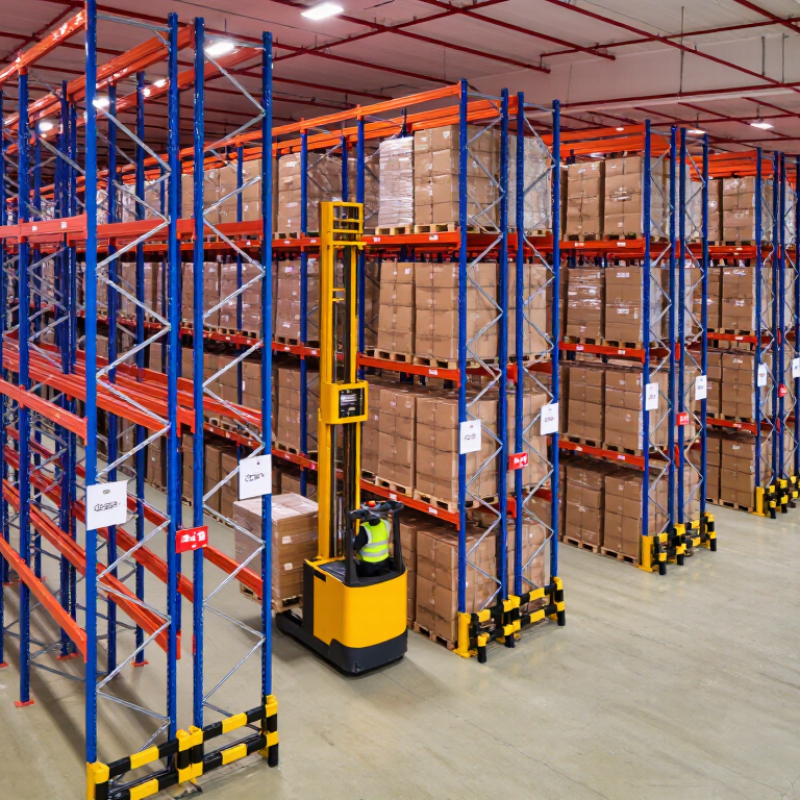
How to Choose the Best Drive-in Storage System?

Understanding How Drive-in Storage Systems Work

How to Choose the Best Drive-in Storage System?

Understanding How Drive-in Storage Systems Work

A drive-in storage system uses steel rails to support pallets inside deep storage lanes. A forklift enters the lane and places pallets from the back toward the front. It then retrieves the newest accessible pallet first. This creates a last-in, first-out flow. Fewer aisles mean higher storage density, especially for large quantities of similar products. However, operators cannot reach every pallet directly.

The system works best when pallets share similar dimensions, weights, and handling requirements. Rails must support the pallet structure correctly, not only the stored load. Forklift clearance also matters. A small measurement error can cause contact with uprights or rails. That risk is easy to underestimate. In real warehouse planning, product rotation and loading discipline often determine success more than density alone.

Tips: Check pallet quality before installation. Weak or damaged pallets may fail inside deep lanes. Confirm the forklift’s width, lift height, and turning space. Inspect rails, frames, and guards regularly. Use clear lane markings and trained operators. No layout is perfect. A trial lane can reveal problems before full installation. Consult a qualified storage professional when loads vary, because a system designed for uniform pallets may perform poorly with mixed inventory.

Assessing Warehouse Needs and Storage Requirements

How to Choose the Best Drive-in Storage System?

Assessing Warehouse Needs and Storage Requirements

Choosing a drive-in storage system starts with a clear warehouse assessment. Measure the usable floor area, ceiling height, aisle width, and loading zones. Record pallet dimensions, product weights, and handling equipment. A system that fits the plan may fail during daily operations.

Consider inventory turnover carefully. Drive-in storage suits high-volume products with limited SKU variety. It commonly supports last-in, first-out access, while frequent picking may require another layout. Review seasonal demand, replenishment times, and batch sizes. I have seen warehouses overvalue capacity and overlook retrieval speed. A neat spreadsheet can still mislead.

Tips: Test a full storage lane with your actual forklift and pallet. Check turning space, visibility, rack clearances, and floor conditions. Ask operators to simulate loading and unloading during busy periods. Keep fire protection, load ratings, inspection routines, and local safety requirements in the design. Leave room for errors. Measurements are not always perfect, especially around columns, doors, and uneven floors. Regular reviews can reveal changing needs before congestion becomes expensive.

Comparing Drive-in Rack Layouts and Configurations

Choosing the best drive-in storage system starts with the rack layout, not the frame alone. In warehouse audits, I often compare single-entry and double-entry designs against product flow. A single-entry layout supports LIFO storage and suits goods with long, stable storage cycles. It uses less aisle space and creates dense pallet blocks. However, forklift access is limited to one side.

A double-entry layout, sometimes called a drive-through configuration, allows loading from one end and unloading from the other. This supports FIFO rotation when pallet dates or batch numbers matter. It also needs more space between blocks and stricter traffic control. Back-to-back drive-in blocks can increase capacity, but they may reduce visibility and complicate stock counts. Tunnel positions improve access for high-volume items. They also consume valuable floor area.

Measure carefully. Pallet depth, forklift turning radius, ceiling height, and load weight all affect the usable layout. A narrow aisle may look efficient on paper, yet feel unsafe during a busy shift. I have seen plans fail because the designer measured the pallet, but not its overhang. Small details matter. Rack depth, rail clearance, floor levelness, and impact protection should be checked by qualified professionals. Local building and fire requirements must guide the final configuration. No layout is perfect. Storage density may rise while accessibility falls. That trade-off deserves a practical review before installation.

Evaluating Safety, Durability, and Accessibility

How to Choose the Best Drive-in Storage System?

Safety should shape every drive-in storage decision. OSHA reports that powered industrial truck incidents cause about 100 worker deaths and 36,000 serious injuries each year in the United States. Drive-in layouts increase forklift interaction with uprights, rails, and rear stops. Select systems with visible load ratings, protected columns, and impact-resistant barriers. Keep it simple. Operators need clear entry points, stable pallets, and enough lighting to judge depth accurately.

Durability depends on more than steel thickness. The Rack Manufacturers Institute’s ANSI MH16.1 standard emphasizes structural design, rated loads, and proper installation. EN 15635 also recommends regular inspections and documented action after damage. Check weld quality, beam connections, guide rails, and pallet compatibility. A bent upright is not a cosmetic issue. It may signal reduced capacity, although the exact risk requires competent assessment.

Accessibility is often underestimated. A 2023 industry survey from the Warehousing Education and Research Council identified labor efficiency and safety as continuing warehouse priorities. Shorter travel paths help, but deep lanes can reduce product visibility and stock rotation. Reserve drive-in storage for uniform products with predictable demand. Test one lane with real pallets and forklifts before expanding. That practical trial may reveal awkward turning angles, poor visibility, or maintenance problems that drawings miss. Even experienced teams can overlook them.

Planning Installation, Operation, and Maintenance

Choosing a drive-in storage system starts before steel arrives. Measure pallet dimensions, load weights, forklift turning paths, ceiling height, and fire protection clearances. NFPA 13 links rack-storage protection to commodity type, storage height, aisle conditions, and building design. A layout that ignores one variable may look efficient but operate poorly.

Installation quality is critical. Anchor every frame to the specified slab, check upright alignment, and document torque readings. Keep drive-in rails level across each tunnel. OSHA estimates that forklifts cause about 85 workplace fatalities and 34,900 serious injuries annually. Therefore, install physical protection at exposed corners and separate pedestrian routes where possible. Small gaps become expensive problems.

Operation should follow a simple discipline. Train drivers to enter squarely, place pallets evenly, and avoid pushing damaged loads deeper into a lane. Inspect uprights, bracing, rails, and anchors at scheduled intervals. The U.S. Bureau of Labor Statistics recorded approximately 2.6 million nonfatal occupational injuries in private industry during 2023. That figure is not specific to storage racks, but it should discourage casual inspections. Replace damaged components, not merely repaint them. Maintenance records should include photographs, dates, load limits, and corrective actions. A weakness remains: many plans assume perfect pallets and careful drivers. Real warehouses need allowances for broken boards, rushed shifts, and changing inventory.

How to Choose the Best Drive-in Storage System? - Planning Installation, Operation, and Maintenance

Stage Decision Dimension Recommended Practice Planning Data and Typical Values Key Verification Point
Planning Storage strategy Use drive-in racking when high storage density is more important than direct access to every pallet. Assign the system to products with relatively low SKU variety and multiple pallets per SKU. Best suited to batch storage, reserve inventory, and temperature-controlled applications where storage density is a primary objective. Confirm that reduced selectivity will not delay order picking or cause excessive pallet reshuffling.
Planning LIFO or FIFO requirement Select drive-in configuration for last-in, first-out operation. Select drive-through configuration when loading from one side and unloading from the opposite side is required. Drive-in: one operating face and generally LIFO. Drive-through: two operating faces and can support FIFO when loading and unloading are controlled by sequence. Match the rack layout to product shelf life, batch traceability, and inventory rotation rules.
Planning Pallet compatibility Check pallet length, width, height, bottom-board design, load overhang, pallet condition, and load stability before finalizing the rack dimensions. Use the actual loaded pallet envelope, not only the nominal pallet size. Allow clearance for safe forklift entry, beam contact, and load variation. Test representative pallets, including the largest, heaviest, and least stable loads expected in daily operation.
Planning Capacity and utilization Calculate capacity from clear building height, aisle layout, rack levels, pallet positions, fire protection requirements, and required operating clearances. Drive-in systems commonly provide higher pallet density than selective racking, but practical capacity depends on SKU concentration and the number of pallets stored per lane. Compare theoretical pallet positions with usable positions after zoning, damaged-pallet exclusions, access requirements, and inventory rotation constraints.
Planning Forklift suitability Select equipment that can enter the storage lane, reach the required level, handle the rated load, and operate safely within the available aisle and rack clearances. Verify maximum lift height, rated capacity at that height, overall forklift width, turning radius, mast configuration, and operator visibility. Conduct an on-site maneuverability trial with the intended forklift and a representative pallet before installation.
Installation Floor and building conditions Survey floor flatness, slab strength, joint locations, drainage, column positions, ceiling height, lighting, sprinklers, and emergency access routes. The slab must support the combined rack, pallet, and forklift loads. Anchorage and base-plate design must follow the engineered system requirements and local regulations. Obtain an approved layout and structural review before drilling, anchoring, or modifying fire-protection systems.
Installation Rack protection Install column guards, end-of-aisle protection, guide rails, lane-entry protection, and clearly visible load-level markings where required by the risk assessment. Protection should address common impact zones, especially rack entrances, upright faces, corners, and locations adjacent to forklift travel paths. Verify that protective devices do not reduce the designed pallet clearance or create new trip and collision hazards.
Installation Safety signage and load data Display maximum unit loads, maximum bay or lane loads, allowable pallet dimensions, operating rules, traffic directions, and restricted access information. Load notices must remain legible from the operating aisle and must reflect the installed configuration, not a generic rack model. Update signs whenever beam levels, pallet types, load weights, or rack configuration changes.
Operation Loading method Load from the back of the lane toward the front, keep pallets centered, and place each pallet squarely on the rails without dragging or striking the structure. Use consistent loading depth and maintain the specified clearance between pallet loads, uprights, rails, and adjacent loads. Operators should stop immediately after any rack impact, pallet instability, abnormal noise, or visible deformation.
Operation Inventory control Assign each lane to an approved SKU, batch, or product family and record pallet position, lot number, quantity, and storage date in the inventory system. Use lane-level identification and barcode or RFID control where inventory accuracy, lot traceability, or expiry management is important. Perform regular cycle counts and verify that lane assignment prevents mixed products or inaccessible stock.
Operation Operator training Train operators in lane entry, pallet alignment, load limits, pedestrian separation, emergency procedures, and the specific forklift used in the facility. Training should include both classroom instruction and practical evaluation in the actual rack environment. Restrict operation to authorized personnel and refresh training after incidents, equipment changes, or observed unsafe practices.
Maintenance Inspection frequency Carry out routine user checks, scheduled internal inspections, and formal technical inspections at intervals based on local requirements, risk level, and operating intensity. A practical program may include daily visual checks, weekly housekeeping reviews, monthly management audits, and a documented periodic expert inspection. Record findings, assign corrective actions, and remove damaged components or unsafe locations from service until repaired.
Maintenance Damage assessment Inspect uprights, rails, bracing, pins, anchors, guards, guide rails, floor connections, and lane components for impact, bending, cracking, looseness, or corrosion. Any damage that affects alignment, load support, anchorage, or pallet stability requires immediate assessment by a competent person. Do not straighten, weld, drill, or replace structural parts without an approved repair method and compatibility check.
Maintenance Housekeeping and environment Keep aisles, rack lanes, floor joints, drainage points, and emergency routes clear. Control moisture, chemicals, temperature extremes, and corrosive exposure. Good housekeeping reduces forklift interference, pallet damage, fire load accumulation, and contamination risk. Define cleaning responsibilities and inspect areas where debris can obstruct rails or conceal floor and anchor damage.
Maintenance Performance review Review storage density, pallet damage, retrieval time, lane occupancy, rack incidents, inspection findings, and maintenance cost on a regular basis. Useful indicators include pallet capacity utilization, damaged-pallet rate, rack-impact frequency, inventory accuracy, and corrective-action closure time. Reconfigure or replace the system when product mix, pallet dimensions, throughput, or safety risks no longer match the original design.

FAQS

How does a drive-in storage system work?

Steel rails support pallets inside deep lanes. A forklift enters the lane and loads pallets from the back forward.

What storage flow does this system use?

It normally uses last-in, first-out access. The newest accessible pallet is retrieved first.

Which products suit drive-in storage best?

Similar pallets work best. They should share comparable dimensions, weights, and handling requirements.

What are the main benefits of this storage system?

Fewer aisles create higher storage density. It suits large quantities of similar products.

What is the main limitation?

Operators cannot reach every pallet directly. Product rotation may suffer when older pallets remain behind newer ones.

What should be measured before installation?

Measure pallet size, load weight, forklift width, lift height, turning space, ceiling height, and fire clearances.

Why does pallet quality matter?

Weak boards can fail inside deep lanes. Check every pallet before loading, especially under heavy products.

How can forklift operations stay safer?

Drivers should enter squarely and place pallets evenly. Mark lanes clearly and separate pedestrian routes where possible.

What maintenance does the system require?

Inspect rails, frames, uprights, bracing, guards, and anchors regularly. Replace damaged components instead of repainting them.

Is a trial lane useful before full installation?

Yes. A trial lane can expose clearance, turning, and loading problems early. Measure twice. Perfect planning is unlikely.

Conclusion

Choosing the best Drive-in Storage system requires a clear understanding of how the structure works and how it supports high-density pallet storage. By allowing forklifts to enter the rack lanes, this system reduces the need for multiple aisles and makes efficient use of warehouse space. However, it is most suitable for operations that store large quantities of similar products with relatively low stock turnover.

Before making a decision, evaluate warehouse dimensions, pallet sizes, load weights, inventory flow, and access requirements. Compare layout options such as single-entry and double-entry configurations, considering storage capacity, loading methods, and product rotation. Safety and durability are equally important, so the system should provide stable support, impact resistance, suitable load ratings, and clear operating procedures. Finally, plan professional installation, regular inspections, proper forklift operation, and timely maintenance to preserve performance. A well-matched Drive-in Storage solution can improve space utilization while maintaining safe, organized, and dependable warehouse operations.

Charlotte

Charlotte

Charlotte is a seasoned marketing professional with a deep understanding of the company's portfolio and a passion for elevating its presence in the market. With a keen eye for detail and a commitment to excellence, she ensures that our professional blog is regularly updated with insightful articles......