China Best Impact Racks for Warehouse Buyers?

Time:2026-11-11 Author:Madeline
0%

Choosing China’s best Impact Racks is not simply a search for the lowest price. Warehouse buyers need protection that matches their aisles, vehicles, rack layout, and daily traffic. A forklift clipping an upright at a busy aisle end can turn a small design oversight into costly downtime. Details matter: steel thickness, anchor design, finish quality, replacement availability, and clear installation instructions. James Reason, a respected human-factors and safety scholar, wrote, “We cannot change the human condition, but we can change the conditions under which humans work.” His point applies to warehouse design, though it is not a rack-selection rule. Good protection helps create safer conditions. It cannot prevent every mistake.

This guide explores how buyers can compare Chinese Impact Racks suppliers with practical questions, not marketing claims. Ask how products are tested, which rack profiles they fit, and whether load and installation information is specific and documented. Request drawings, inspect sample welds and coatings, and confirm how damaged components can be replaced. Check that the supplier understands your equipment and aisle clearances. A polished catalog is not proof of a dependable product. Neither is a low quotation. Some details may only become clear after installation; that deserves honest attention. Buyers should also verify that proposed systems meet the requirements applicable to their site. The strongest choice is not automatically the most expensive or the most advertised. It is the option whose evidence, fit, and support stand up to careful review.
China Best Impact Racks for Warehouse Buyers?

What Impact Racks Are and How They Protect Warehouse Storage Systems

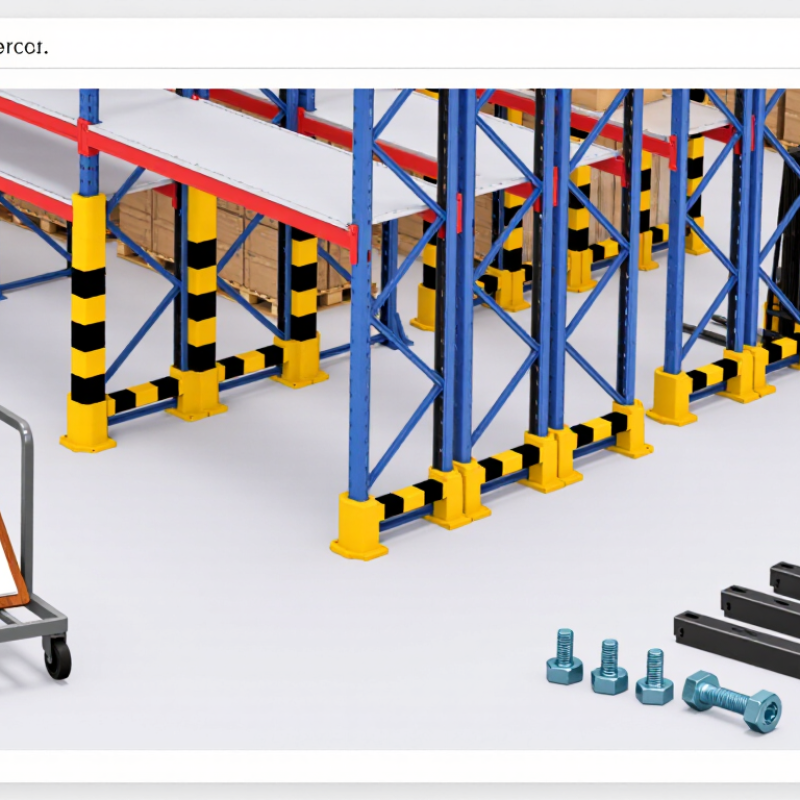
In a warehouse, impact racks are protective barriers placed around vulnerable storage areas. They are different from pallet racks, which hold inventory. Impact protection may include upright guards, end-of-aisle barriers, and corner protectors. These steel or polymer components help reduce damage when forklifts bump rack legs or nearby structures. A scuffed guard can show where contact happens. That detail is useful.

A guard can help prevent a small collision from bending a rack upright, but it cannot make a damaged rack safe. Check the rack, anchors, and floor after a hard impact, and follow the equipment maker’s inspection guidance. Placement matters. Guards should protect exposed corners and traffic-facing uprights without narrowing aisles or obstructing loads. Warehouse teams should also match protection to vehicle size, turning space, and the weight of stored goods. It takes observation. Traffic patterns can change.

Tips: Mark damaged guards and report impacts promptly. Keep aisle markings visible, and inspect bolts and floor anchors during routine checks. Protection helps, but careful driving still matters.

China Best Impact Racks for Warehouse Buyers? - What Impact Racks Are and How They Protect Warehouse Storage Systems
Impact protection for warehouse racking combines suitable rack design, protective components, safe equipment operation, and regular inspection. The best solution depends on the layout, handling equipment, loads, and site-specific risk assessment.
Warehouse Area Typical Impact Risk Common Protection Approach Key Design and Buying Checks How It Helps
Rack aisle ends Forklifts turning into or out of an aisle may strike exposed rack frames. Install appropriately positioned end-of-aisle barriers or guards, while keeping travel paths clear. Check aisle width, turning space, barrier anchorage, floor condition, and compatibility with the rack layout. Helps reduce direct contact between handling equipment and exposed rack ends.
Rack uprights A truck or pallet can hit a column during loading, retrieval, or maneuvering. Consider upright guards or other engineered protective devices suited to the rack and operating conditions. Confirm the guard does not obstruct beams, connectors, inspections, or the required clearances. Follow the rack designer’s guidance. Provides a protective layer at vulnerable upright locations; it does not make a damaged upright safe to use.
Rack corners and building columns Tight turns and restricted sightlines can expose rack corners and structural columns to vehicle contact. Use suitable corner guards, column protection, or a revised traffic route based on the site risk assessment. Check vehicle approach angles, visibility, pedestrian routes, fixing details, and clearance from stored loads. Helps shield frequently exposed corners and supports clearer separation of traffic from storage areas.
Pedestrian and vehicle interfaces People, forklifts, and pallet trucks may share crossings or work areas. Use physical separation where appropriate, supported by marked routes, crossings, visibility measures, and traffic rules. Plan protection around actual traffic flow and emergency access. Barriers must not create new blind spots or trip hazards. Reduces opportunities for vehicle contact with both people and nearby storage equipment.
Loading and staging areas Frequent vehicle movement, reversing, and temporary pallet staging can increase collision exposure. Assess the need for rack-end protection, traffic controls, designated staging zones, and clear separation from pedestrian routes. Keep exits, fire equipment, and access routes unobstructed; account for vehicle type and operating frequency. Helps manage high-activity areas without compromising access or safe warehouse operations.
All rack locations Undetected impact damage, overloading, incorrect installation, or changes to the storage layout. Maintain load notices, train operators, inspect racks regularly, and report and assess visible damage promptly. Use the rack supplier’s documentation and a competent person’s assessment for damage, repairs, modifications, and load capacity. Supports early hazard identification and helps keep the storage system within its intended operating limits.
Buyer note: Impact guards and barriers are not a substitute for correctly designed racking, safe operating procedures, or inspection. Do not assume a protection product can absorb a particular impact unless its documented performance and installation are suitable for the specific application. Have damaged rack components assessed before returning the affected area to service.

How Impact Racks Are Designed and Manufactured in China

Impact racks are designed to protect pallet-rack frames at busy loading points, where forklifts often turn or reverse. In Chinese factories, the process usually begins with drawings, load requirements, and measurements of the rack upright. Engineers select steel thickness, profile shape, and mounting points to match the intended application. Small details matter. A poorly placed bolt hole can make installation awkward.

Manufacturing commonly involves cutting and forming steel sections, welding connection plates, and applying a protective finish. Workers check dimensions with gauges and inspect welds before the parts move to coating. Powder coating is often used for a durable surface, though preparation quality affects how well it adheres. On a production line, a few millimeters can change the fit. That is easy to overlook.

Reliable buyers should ask for material specifications, dimensional tolerances, and inspection records for the actual order. A sample can reveal sharp edges, uneven coating, or holes that do not align with existing uprights. Load capacity should be confirmed for the rack system and installation conditions, not guessed from appearance. Factory capability varies, and a polished sample does not prove every batch is consistent. That deserves a second look.

Key Materials, Load Ratings, and Compatibility to Compare

For warehouse buyers comparing impact racks in China, start with the guard material and the actual collision risk. Steel guards resist repeated contact from forklifts, but can transfer force to rack uprights if poorly mounted. Polymer barriers may absorb impact and recover shape, though temperature and load conditions matter. Ask for documented test conditions, not just a “heavy-duty” label. There is no universal impact rating that makes every product directly comparable.

Keep rack capacity separate from impact protection. The ANSI/RMI MH16.1 specification sets design requirements for steel storage racks; a rack’s rated capacity depends on its configuration, beam spacing, bracing, and installation. Request drawings showing the intended bay layout and load per level. BLS reported 4.8 recordable injury cases per 100 full-time workers in warehousing and storage in 2023, underscoring why visible damage checks matter. A protector does not restore a bent upright.

Compatibility is often where purchasing gets messy. Match guard height and fixing points to upright dimensions, base plates, anchors, and aisle clearance. Check turning paths with the largest forklift, then confirm that guards do not block pallet entry or inspections. I still see buyers compare only steel thickness. That misses the fit. The supplier should provide installation guidance and inspection criteria, ideally tied to the rack manufacturer’s approved design. Sources: ANSI/RMI MH16.1 and the U.S. Bureau of Labor Statistics’ 2023 Survey of Occupational Injuries and Illnesses.

How to Evaluate Chinese Suppliers and Product Quality

China Best Impact Racks for Warehouse Buyers?
How to Evaluate Chinese Suppliers and Product Quality

A credible supplier should provide more than a price sheet and a polished catalogue. Ask for rack drawings, steel grade certificates, weld procedures, coating specifications, and load calculations tied to your exact beam lengths and frame layout. For North American projects, compare the design basis with ANSI MH16.1; requirements vary by location. Check that test reports identify the product tested, not just a similar model. Numbers need context.

Inspect a production sample or finished installation. Look closely at beam-end connectors, upright perforations, weld consistency, and paint coverage around corners. Confirm tolerances and packaging details, since bent frames can arrive after a long shipment. An independent inspection can verify dimensions and material records before dispatch. A factory audit helps, but one visit cannot prove every batch is consistent.

Safety deserves attention. NFPA’s report Structure Fires in U.S. Warehouses found an average of 1,210 warehouse structure fires annually from 2010 to 2014, with $155 million in direct property damage each year. That figure is not specific to rack failures, but it underlines the cost of weak storage controls. It is easy to overvalue a low quote; compare warranty terms, replacement-part lead times, and documented inspection plans too. A small gap in the paperwork can matter.

Installation, Inspection, and Maintenance for Safe Use

China Best Impact Racks for Warehouse Buyers?

Safe performance starts with careful installation. Before loading an impact rack, check that the floor is suitable, anchors are secure, and frames are plumb. Keep aisles clear so forklifts can turn without clipping uprights. Fit column guards where trucks pass close to rack legs. A small alignment error can grow under repeated loading.

Use the rack’s load signs to guide operators, and never assume a beam can carry more because it looks sturdy. OSHA’s 29 CFR 1910.176(b) requires stored materials to be stable and secure against sliding or collapse. The ANSI MH16.1 specification also provides engineering guidance for steel storage racks. These references help buyers assess installation plans, but site conditions still matter.

Inspect uprights, beams, bracing, anchors, and guards on a routine schedule, and after any visible forklift impact. Look for bent steel, loose connections, cracked welds, or missing locking pins. A painted beam can still be damaged underneath. Remove affected bays from service until a competent person evaluates them; do not straighten damaged parts by guesswork. The U.S. Bureau of Labor Statistics reported 4.8 recordable injury and illness cases per 100 full-time workers in warehousing and storage in 2022. That figure is not rack-specific, but it reinforces why inspection details matter. Keep dated records, even when the entry seems repetitive. Rushed notes can miss a change.

China Best Impact Racks for Warehouse Buyers? Installation, Inspection, and Maintenance for Safe Use

A practical safety checklist for evaluating impact racks and their surroundings.

The bars count checklist items shown for each category, not incident rates or regulatory limits. Follow the rack manufacturer's installation instructions and rated load information; inspect for damage and address unsafe conditions promptly.

FAQS

What details shape an impact rack design?

Engineers use drawings, load requirements, upright measurements, steel thickness, profile shape, and mounting points. A misplaced bolt hole can complicate installation.

How are impact racks typically manufactured?

Steel sections are cut and formed, then connection plates are welded on. Workers check dimensions and welds before applying a protective finish.

What should buyers request from a supplier?

Request material specifications, dimensional tolerances, inspection records, drawings, weld procedures, coating details, and load calculations for your exact layout. Paperwork matters.

How can a sample reveal quality problems?

Check for sharp edges, uneven coating, holes that do not align, and inconsistent welds. Look closely at the corners.

How should load capacity be verified?

Confirm capacity for the rack system, beam lengths, frame layout, and installation conditions. Not from appearance alone.

Does a factory audit guarantee every order is consistent?

No. An audit offers useful evidence, but it cannot prove every batch matches. That deserves another look.

What should buyers check before shipment?

Ask for an independent check of dimensions and material records. Confirm packaging too; bent frames can arrive after a long journey.

How should buyers compare supplier quotes?

Compare warranty terms, replacement-part lead times, and inspection plans alongside price. A low quote may leave important gaps.

Conclusion

Impact Racks are protective components installed at the ends of warehouse rack rows and in other exposed areas. They help absorb or deflect contact from forklifts and other handling equipment, reducing the risk of damage to rack frames and stored goods. Choosing the right system involves comparing its materials, construction, load ratings, and compatibility with existing rack layouts and floor conditions. Buyers should also consider how the products are designed and manufactured in China, including consistency of workmanship and suitability for the intended warehouse environment.

When evaluating suppliers, request clear product specifications and verify that stated performance information matches the proposed application. Consider communication, quality-control processes, and the supplier’s ability to provide practical installation guidance. Safe use depends on proper positioning and anchoring, followed by routine inspections for loosened fixings, deformation, or other signs of impact. Regular maintenance and prompt attention to damage can help preserve warehouse storage systems and support safer day-to-day operations.

Madeline

Madeline

Madeline is a dedicated marketing professional with a wealth of expertise in our company's core offerings. With a keen understanding of the industry, she brings a unique perspective to her role, consistently delivering high-quality content that highlights the superior aspects of our products. As......